 Shoopy
 Fashion and apparel
Large catalogues with sizes and colours as variants, collections, and the Lumio theme for an editorial storefront.
The brand is yours. The store should be too. Your own website, your own Android and iOS apps, and one set of products, stock and orders behind all of them.
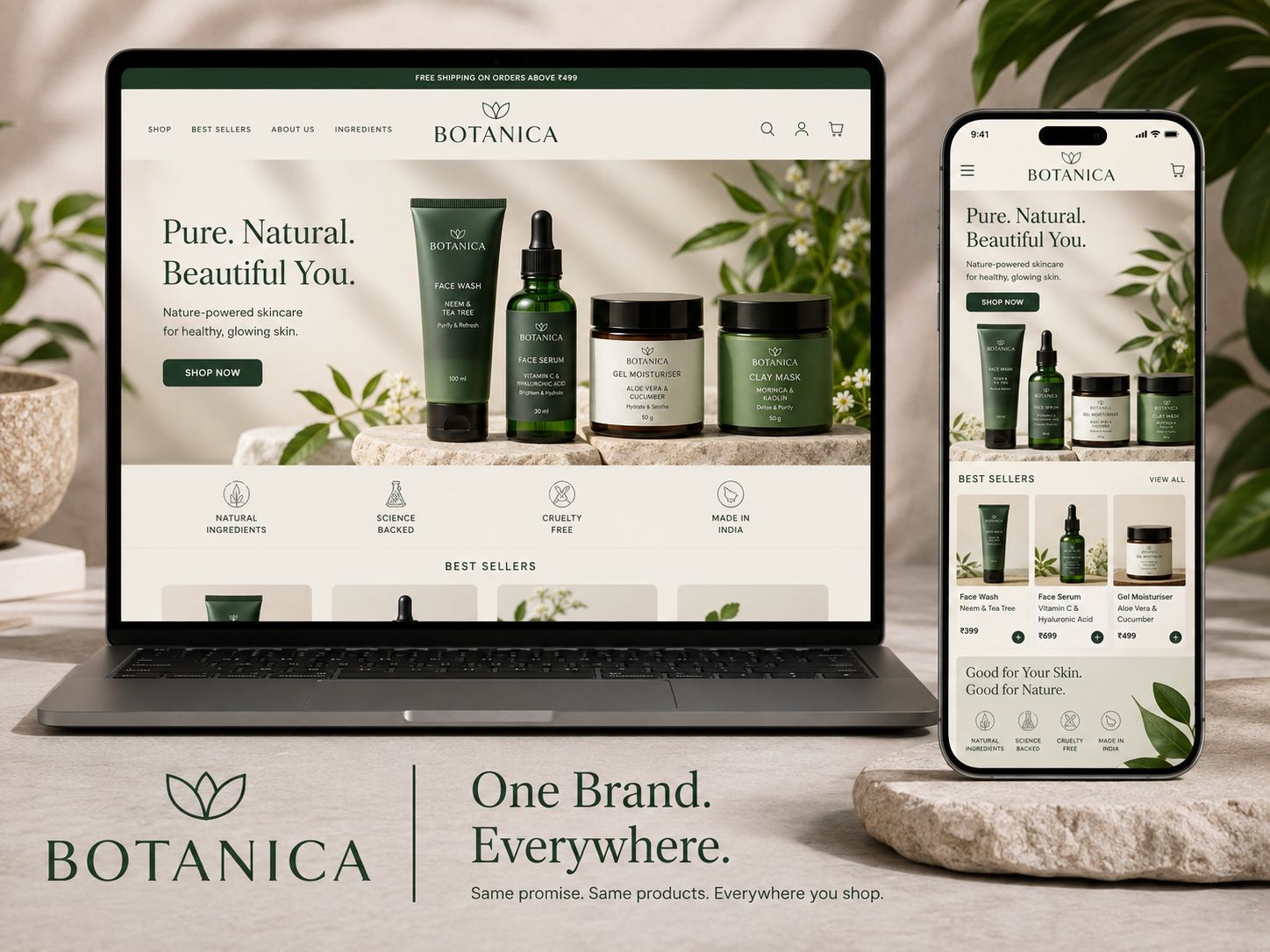
Shoopy is an India-first ecommerce platform for D2C brands. It runs the brand's online store on its own domain, its branded Android and iOS shopping apps, and its products, inventory, orders, payments, delivery and customer messaging as one connected system. The brand sells under its own identity and keeps the direct relationship with its customers.
Brands that sell their own products, under their own name, and want the customer to come back to them and not to a marketplace.
Large catalogues with sizes and colours as variants, collections, and the Lumio theme for an editorial storefront.
Premium product pages on the Bloomix theme, repeat buying, and a branded app for launches and restocks.
Direct ordering, offers, delivery charges by area and weight, and WhatsApp reminders that bring customers back.
Rich product presentation on the Nestly theme, and a customer list the brand keeps.
Website, apps and operations on one platform, without building and joining separate systems.
Your website and your apps are not separate stores. They read the same catalogue, stock, customers and orders, so a price or stock change is made once and every channel shows it.
A shopping app under your own name on Google Play and the App Store, running on the same store as your website.
Your plan builds the app and gives you the file. Publishing it to the stores, and keeping it updated, is an add-on billed yearly.
Explore branded mobile apps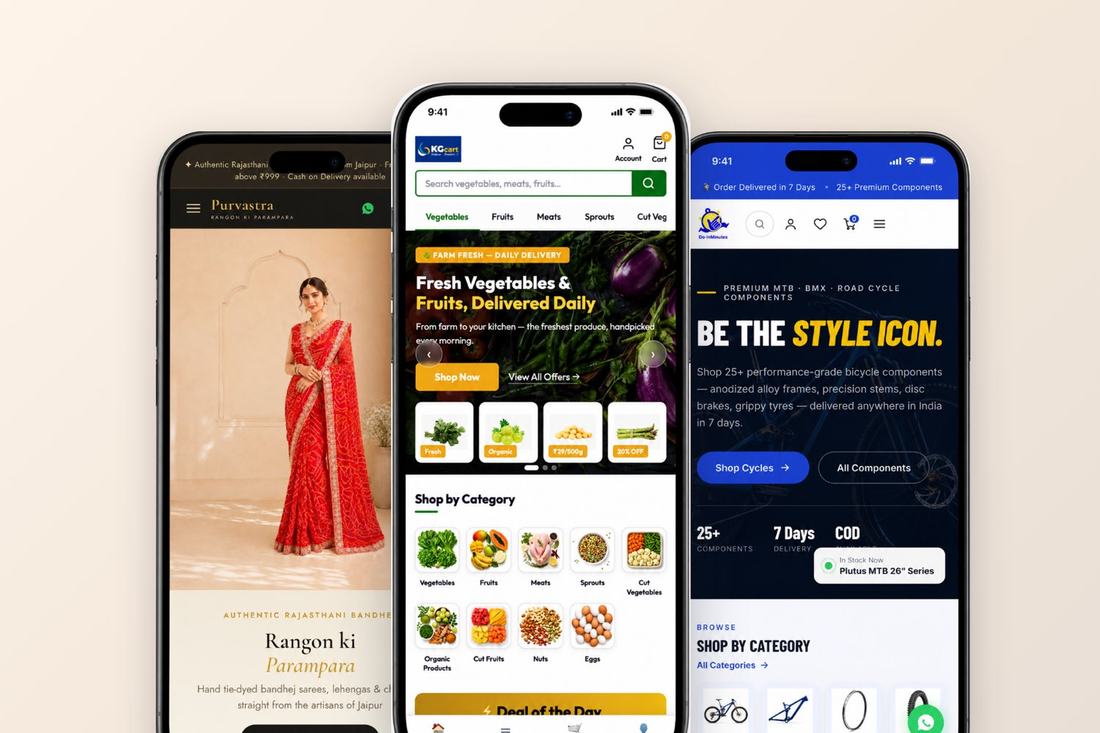 Branded apps · built on Shoopy
 Perfume2Spray sells perfumes and deodorants in India through its own ecommerce website and a branded Android shopping app, both built on Shoopy. Customers can shop on the site or in the app, and the brand keeps its own storefront, catalogue and customer relationship.
Read the Perfume2Spray story“Using Shoopy was very important for our success. They understand e-commerce deeply, and their platform helped us grow online.”

On your Shoopy store the domain is registered in your name, every buyer's name, number and order history sits in your dashboard, and there is no commission up to your plan's order limit, then a small capped fee an order (see the plan table).
| Marketplace | Your Shoopy store | |
|---|---|---|
| Shopping environment | The marketplace controls it | Your brand controls the storefront |
| What the customer sees | Many competing brands | Only your brand |
| Customer relationship | Held by the marketplace | Direct, and the list is yours |
| Storefront and domain | Limited customisation | Your own domain and branded experience |
| Best used for | Discovery | Owned commerce and repeat buying |
Many brands use both. A marketplace helps new customers find the brand. An owned D2C store gives the brand a second channel where it controls the customer experience and keeps the relationship.
Shoopy is not only a website builder. It runs the whole loop, from the ad click to the repeat order.
Meta and Google ads with the pixel and Conversions API installed from the app store, plus social, creators and organic search.
A branded storefront on your own domain, with collections, product pages and SEO titles you control.
UPI, cards, netbanking, wallets or cash on delivery. Advance payment on COD and GoKwik checkout where a brand needs them.
The stock count updates, the label prints, the pickup is booked and the tracking number attaches itself to the order.
Abandoned-cart reminders on WhatsApp on every plan. Confirmation, shipping and delivery updates on WhatsApp on Business and above.
The branded app, push notifications, a customer list you can segment and message, and reward points on Professional and above.
Six areas, one dashboard. Each link goes to the detail.
Shoopy is built in India. The parts an Indian D2C brand needs are in the platform, not in a plugin you have to find.
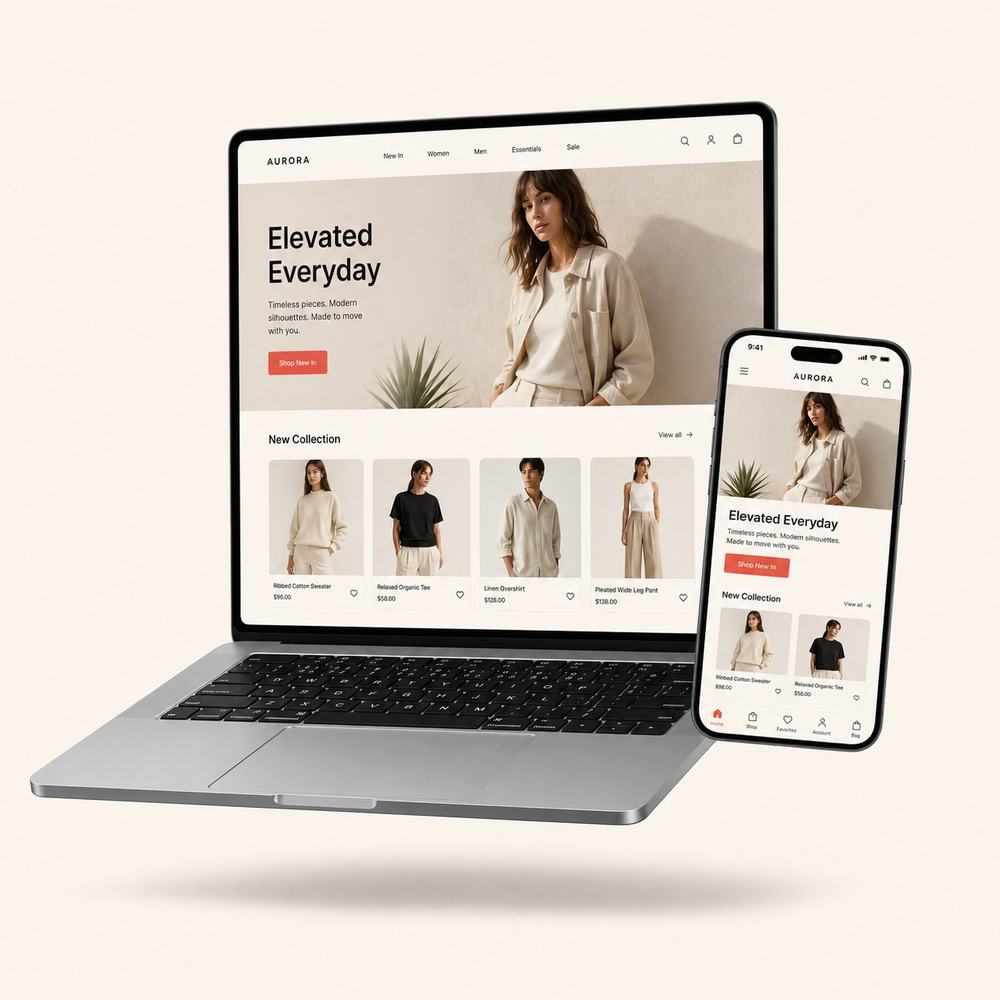 Lumio theme · built on Shoopy
 What each route gives the brand. Nothing here says one is cheaper or faster for every brand; it says what is included and what you build.
| Marketplace only | Website + separate app development | Shoopy | |
|---|---|---|---|
| Own website | No | Yes | Yes, on every plan |
| Branded Android app | No | Custom development | Built on Professional and above |
| Branded iOS app | No | Custom development | Built on Business and above |
| Shared catalogue | — | Needs integration | Yes |
| Shared inventory | — | Needs integration | Yes |
| Shared orders | — | Needs integration | Yes |
| Customer relationship | Limited | Yes | Yes |
| Ongoing development | Controlled by the marketplace | Your responsibility | Managed by the platform |
Plans differ by product limits, staff logins, which branded app is built, multi-location features and the orders included at 0% fee. Publishing an app to the stores is an add-on.
Getting started
Everything you need to start selling online.
500 products · your own domain · WhatsApp cart recovery
₹2,499 per year
0% fee on your first 250 orders a year.
Renews at ₹2,299 a year.
What you get
Most popular
A growing store that wants ads, staff and its own Android app.
Basic + Android app · 5 staff logins · Meta and Google ads
₹5,499 per year
0% fee on your first 500 orders a year.
Renews at ₹4,999 a year.
All of Basic, plus
Best for scale
High-volume sellers, several locations, hands-on support.
Professional + multiple locations · 25 staff logins · store setup
₹12,999 per year
0% fee on your first 1,000 orders a year.
Renews at ₹8,999 a year.
All of Professional, plus
Hands-on help
Complex operations
Custom builds, native apps and a named account manager.
Business + native apps · custom features · account manager
Custom priced to your scale
0% fee on your first 2,000 orders a year.
All of Business, plus
Prices exclude 18% GST. Every plan is billed yearly, carries a 7-day money-back guarantee, and is subject to the fair use policy.
Selling in Nepal or the UAE? See prices in Nepali rupees or dirhams — see supported markets.
Basic ₹2,499 per year
Start 14-day free trialFour steps. Most stores are live within about a week; a complex catalogue can take longer.
Connect your domain, add your logo and colours, pick a theme.
Products, variants, prices and stock from a spreadsheet or your current platform.
Payment gateway, cash on delivery, shipping, delivery charges and your policies.
Website first. Then the Android and iOS apps your plan and add-ons provide.
A D2C (direct-to-consumer) ecommerce platform is software a brand uses to sell to customers directly, through its own website and apps, instead of only through marketplaces or retailers. Shoopy is one: it runs the store, the branded apps, the catalogue, orders, payments, delivery and customer messaging in one system.
Yes. Shoopy is built in India for Indian commerce: UPI and card payments through Indian gateways, cash on delivery with advance payment, GST invoices, Shiprocket and Delhivery built in, and WhatsApp for cart recovery and order updates. Brands in Nepal, the UAE and other countries use it too.
Yes. You pick a theme, add your logo and colours, connect your own domain and load products from a spreadsheet. No code is needed, and HTTPS is set up for you.
Yes. The Professional plan and above build an Android app for your store under your own name; on Basic it is an add-on. Publishing the app to Google Play, and keeping it updated, is an add-on billed yearly. The plan gives you the built app file.
Yes. The Business plan and above build an iOS app for your store; on Basic and Professional it is an add-on. Publishing to the App Store under your own developer account is an add-on billed yearly.
Yes. The website and the apps read the same catalogue, stock, customers and orders. You change a price or a stock count once and every channel shows it.
Yes. Connect the domain you own — HTTPS is set up for you, and the domain stays registered in your name, not ours.
Yes. Customers pay by UPI, cards, netbanking and wallets through gateways such as Razorpay, Cashfree and PayU, or choose cash on delivery. On Professional and above you can collect an advance on COD orders, and GoKwik checkout with RTO prediction is available as an integration.
Yes. Products, stock, customers and past orders import from a spreadsheet or from your current platform. Most stores are live within about a week; a complex catalogue can take longer. Many brands run both for a while.
Plans are billed yearly and differ by product limits, staff logins, which branded app is built, multi-location features and the number of orders included at 0% fee. Publishing an app to the stores is an add-on. The current prices are on the pricing page.
GoKwik is a checkout and RTO-prediction service that installs from the Shoopy app store. It is optional; the standard checkout works without it. D2C brands with heavy COD tend to feel the difference.
Two levers: RTO prediction flags risky orders before you ship, and advance payment on COD collects a token amount upfront. A customer who has already paid part of the bill usually opens the door.
Bring your current website, catalogue or app requirements to a demo. We will show how the storefront, the mobile apps, inventory and orders work together.