 Shoopy
Retail shop ecommerce platforms in India compared on plans and payments (2026)
Pick an ecommerce platform for retail shop to sell online in India: five compared on plan price, order fees, payments, shipping and counter billing.
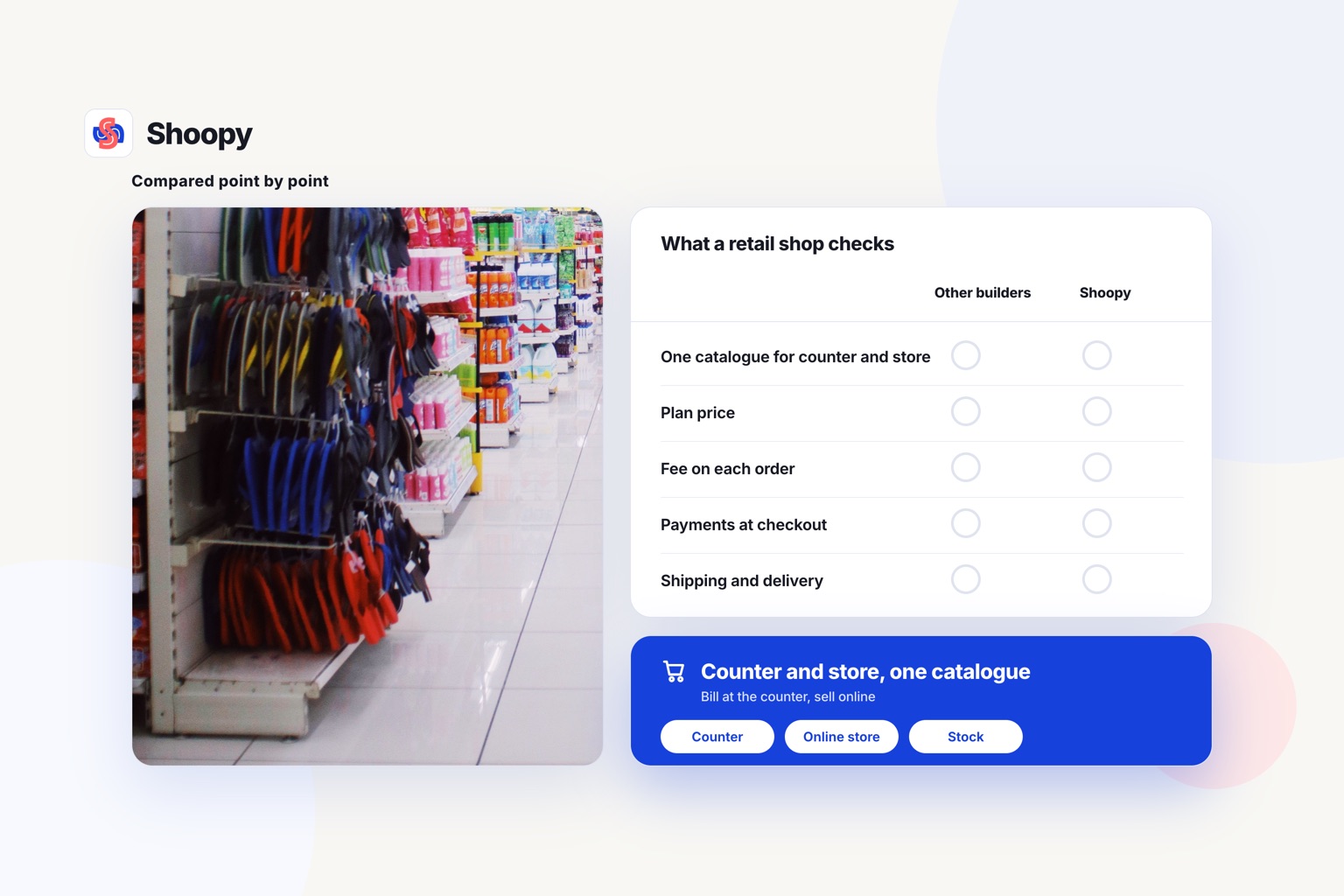
Quick Answer: A retail shop in India should pick a platform whose online store and counter share one catalogue, then compare pricing, payments and shipping. On Shoopy, the counter and the storefront read the same catalogue; plans and current prices are on the pricing page. Test it: bill one item and check the online stock drops by one.
Choosing an ecommerce platform for a retail shop that wants to sell online is a decision about bills more than features. It compares five platforms on the costs that move as sales grow.
Four costs decide the choice: the plan fee, the fee on each order, the payment gateway’s fee and the delivery charge. A shop with a counter has one more question: does the online store read the same catalogue as the till? The sections below sort the platforms by the kind of shop each one suits, not by a rank.
Which platforms suit a shop that also bills at a counter?
| Platform | Built for | Plan price and order fees | Counter billing |
|---|---|---|---|
| Shopify | Brands that sell mostly online | Basic ₹1,499 a month billed yearly, plus 2% when a third-party provider takes the payment, as of October 2026 | Casual in-person selling on every paid plan; POS Pro for a full counter is ₹7,000 a month per shop, billed yearly, as of October 2026 |
| WooCommerce | Shops with a developer or an agency | Core free with no revenue share; hosting $25 to $350 a month for most stores, in US dollars, as of October 2026 | Its own POS is not offered in India; it connects to third-party POS systems |
| Wix | Sites built with a drag-and-drop editor | Prices vary by country; payments and eCommerce start on the Core plan | Wix POS is offered only to sellers in the US, Canada and the UK on Wix Payments, not in India |
| Dukaan | Sellers getting started | ₹0 plan with a 4.99% service fee, capped at ₹200 per order; Starter ₹2,500 a year, as of October 2026 | Not listed on its pricing page |
| Shoopy | Shops that bill at a counter and sell online | Yearly plans with a fee-free order allowance each year, then a small capped fee per order; current prices on the pricing page | Billing at the counter from the same catalogue as the store |
Prices, plans and features of other platforms in this article were read from each vendor’s own pages in October 2026 and can change.
What does each platform charge a retail shop in India?
Shopify’s India pricing page puts Basic at ₹1,499 a month on yearly billing, or ₹1,994 on monthly billing, as of October 2026. Grow is ₹5,599 a month billed yearly on the same page, as of October 2026.
WooCommerce’s own pricing page calls it a free, open-source platform with no platform fees and no revenue share. The same page puts hosting at $25 to $350 a month for most stores, in US dollars, as of October 2026. A shop without a developer should also budget for setup help and updates.
Wix’s plans page shows prices in the visitor’s local currency. Its Core plan is the first one to list payments and eCommerce.
Dukaan’s pricing page lists a ₹0 plan and paid plans of ₹2,500, ₹8,000 and ₹50,000 a year, as of October 2026. The service fee runs from 4.99% on the ₹0 plan down to 0.99% on Infinity, capped at ₹200 per order, and does not apply to manual orders, as of October 2026.
What do UPI, card and cash on delivery orders cost the shop?
Every online platform for retailers hands payments to a payment gateway, and the gateway usually charges the shop on each paid order. Razorpay’s pricing page says its charges are a percentage of each online payment and vary with the payment method the customer uses, with no setup fee and no annual maintenance charge. Razorpay’s offer terms waive the platform fee for merchants activated from 1 July 2026, on their first 90 days or ₹5,00,000 of domestic payments, whichever comes first, as of October 2026; prepaid, corporate, Amex, Diners, EMI and international payments are excluded, GST is still charged on the standard 2%, and a ₹199 KYC fee may apply.
That gateway fee sits next to the platform’s own fee, not inside it. As of October 2026, Shopify adds 2% on Basic, 1% on Grow and 0.6% on Advanced when a third-party provider takes the payment. WooCommerce’s pricing page lists only the processor’s own fees.
Cash on delivery skips the gateway, but a refused parcel costs you delivery both ways. An advance payment on cash on delivery orders cuts that loss, so check which plan carries it before you switch cash on delivery on.
On Shoopy, checkout runs through Razorpay, PayU or Cashfree with UPI, cards and cash on delivery. Advance payment on cash on delivery comes with Professional and above. Checkout choices are covered in more detail in this comparison of website builders with cash on delivery and a payment gateway.
How should a shop charge for shipping and local delivery?
Set the delivery charge before the first order, because a flat charge that suits nearby customers loses money on far ones. A shop that delivers in its own area needs charges by area. A shop that ships across India needs charges by parcel weight and a courier.
Shopify’s pricing page lists live third-party shipping rates on its Advanced plan, and WooCommerce’s marketplace sells shipping-rate and label-printing extensions. Dukaan’s pricing page lists Dukaan Delivery on its ₹0 plan, as of October 2026.
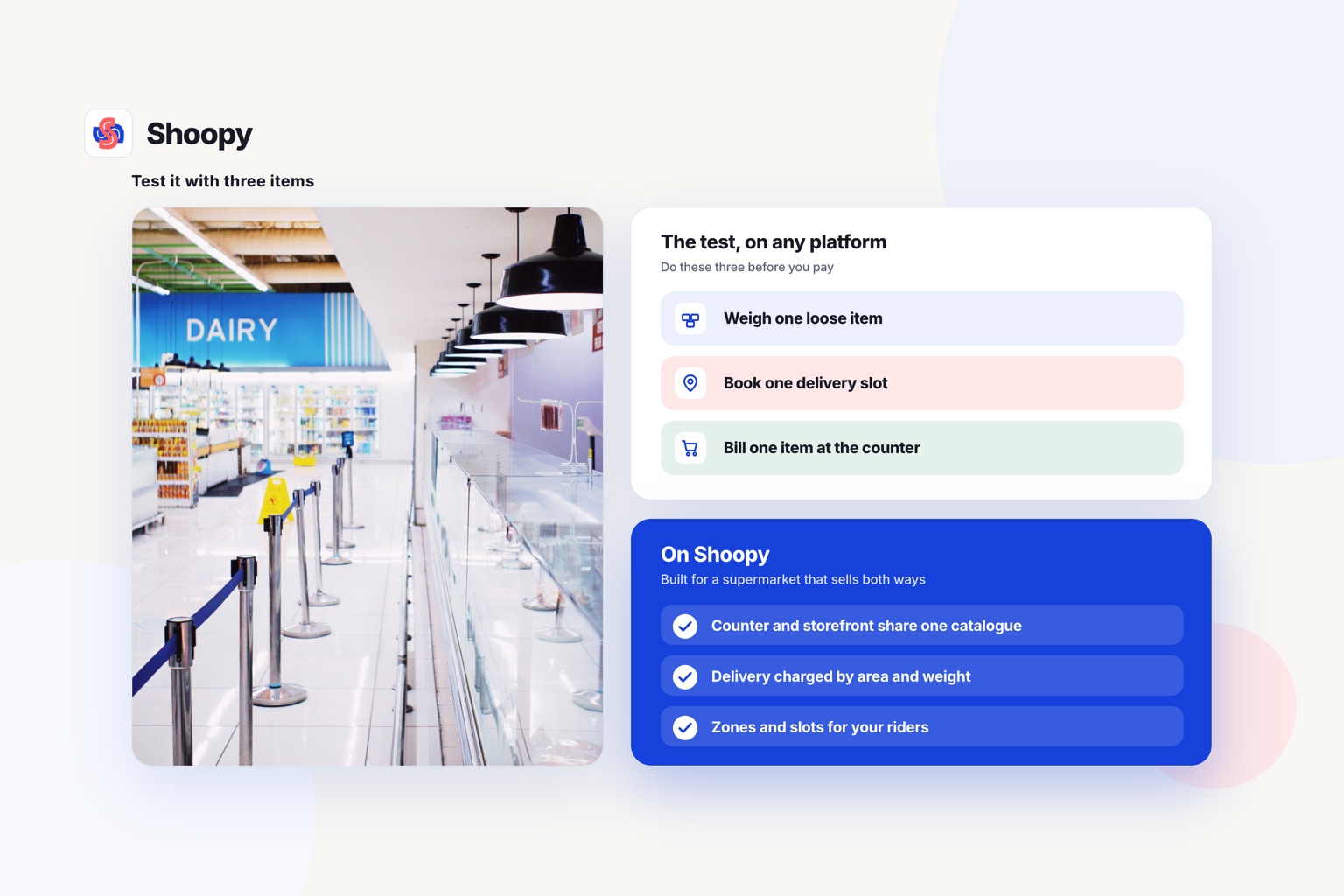
Test it the way a customer would. Place one order to a nearby PIN code and one to a far one, and check that each charge covers your real cost.
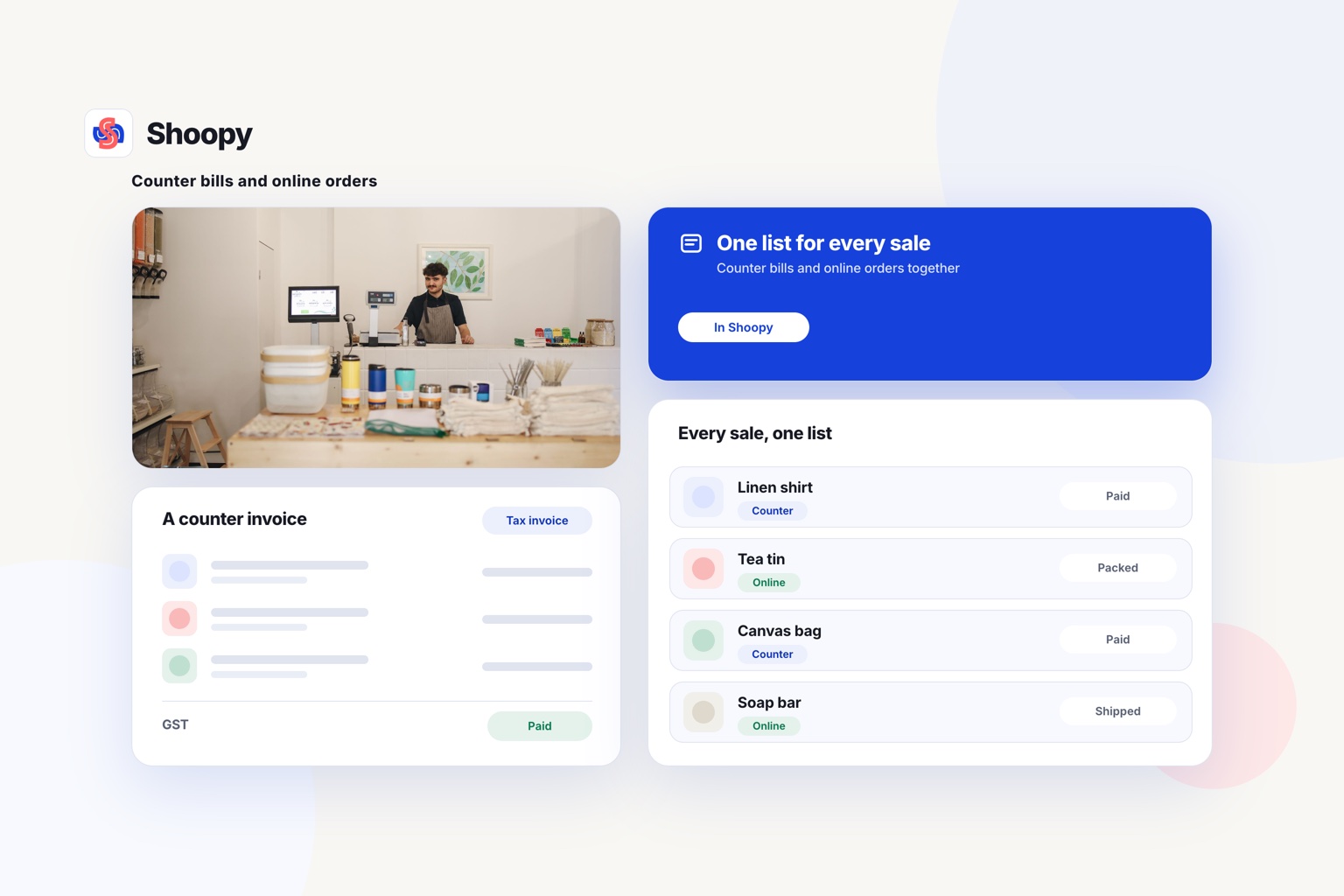
Where does GST fit when the counter and the store share a catalogue?
In India, the GST invoice rules on the CBIC portal set out what a tax invoice shows, including the rate and amount of central tax, State tax or integrated tax. Once you are registered, each order gets a tax invoice with your GSTIN and the tax split; a composition seller issues a bill of supply instead. The HSN code is required on invoices to registered businesses (4 digits for turnover up to ₹5 crore, 6 digits above it) and is optional on invoices to consumers at ₹5 crore turnover or less, as of October 2026 (Notification 78/2020-Central Tax). Those details belong on the product once, not typed again for each channel.
With one catalogue, the HSN code and tax rate set on a product reach both the till bill and the online invoice. With two catalogues, a rate corrected at the counter stays wrong online until someone notices. For more on joining the till and the website, read about retail billing with an online store.
Which ecommerce platform fits a retail shop that wants to sell online?
Sort by the kind of shop, not by rank: a brand that sells mostly online fits Shopify. There, casual in-person selling comes with every paid plan and POS Pro for a full counter costs ₹7,000 a month per shop, billed yearly, as of October 2026. A shop with a developer or an agency fits WooCommerce, paying for hosting and extensions instead of a plan fee.
A seller testing demand with a few products can start on Dukaan’s ₹0 plan and accept its service fee, as of October 2026.
A shop that bills at a counter, counts stock and delivers in its own area is the case Shoopy is built for. In India it charges a yearly plan fee, and its order fee past the plan’s limit is capped.
Orders are commission-free up to a yearly allowance, then carry a small capped fee. The plans and current prices are on the pricing page. Bill a product at the counter by barcode and the online stock drops by one. Every plan charges delivery by area and weight and prints GST invoices, and 50,000+ businesses run on Shoopy, as the homepage states.
One boundary: running several shops on one account needs the Business plan or above.
What changes as a retail shop’s online orders grow?
Fees that look small at ten orders a day become a large line at two hundred. A percentage fee grows with every sale, while a yearly plan fee stays the same however many orders you take.
Work out three numbers before you choose: this year’s orders, next year’s orders and your average order value. Then read each plan’s fee at both order counts, including any cap and what happens past a yearly limit. Each rival’s pricing model is laid out on this platform-by-platform comparison.
Growth also brings staff and stock. Check how many staff logins a plan carries, and whether stock is counted per shop once you open a second counter.
Mistakes that cost a growing shop the most when it moves online
The first is running two catalogues. The till holds tax codes the website never sees, the website holds photos the counter never uses, and every price change is made twice. The fix is structural: one catalogue for both channels.
The second is reading the plan price and skipping the fee rules. A low monthly plan with a fee on every order can cost more than a yearly plan once orders grow. Read the fee, the cap and the renewal price before you sign.
How do you test two platforms on your shop’s own stock and counter bills?
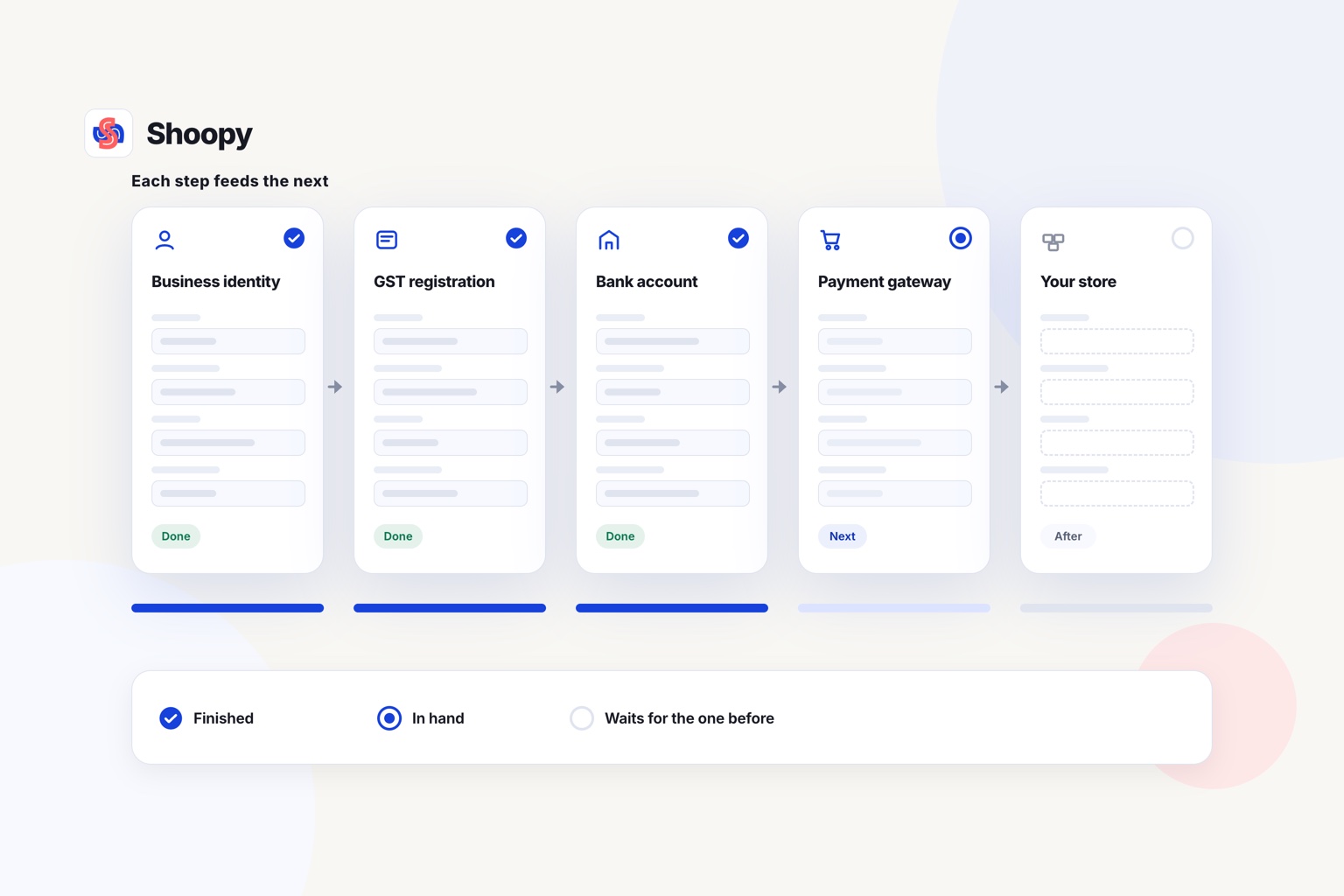
Shortlist two platforms that match how your shop sells, then run the same test on each. List ten products, connect a gateway, set delivery charges and bill one item at the counter.
If the counter and the store must share one catalogue, set up your online store on your own domain. Test it on the 14-day free trial, which needs no card.
Frequently asked questions
Can one Shoopy account run a second shop?
Yes, on the Business plan and above. As of October 2026, Business is the plan that adds more shops, and it includes 25 staff logins. Stock is counted per shop and warehouse, so each counter sells from its own count.
Do extensions raise the yearly bill on WooCommerce?
Yes, each paid extension adds its own charge. WooCommerce’s extension store shows a visitor in India its paid extensions’ yearly prices in rupees, on top of hosting. List the extensions your shop needs for payments, shipping and counter sales before you compare the total with a hosted plan.
Does a free domain voucher cover a domain you already own?
Not always. Wix’s plans page says most Premium plans include a one-year free domain voucher, but it is valid only for a new domain bought from Wix, not for one you already own. If you own a domain, check that the platform lets you connect it.
When does money from an online order reach the shop’s bank account?
It depends on the gateway’s settlement cycle, not on the platform. Razorpay’s pricing page says payments settle on your settlement cycle, typically T+1 (the next day) or instant. Cash on delivery money reaches you only after the courier or your rider hands it over.
Is the platform fee charged on orders entered by hand?
Not always. On some platforms, the per-order service fee covers only orders placed through the platform, and orders you key in by hand carry none. A sale billed on a separate POS machine at the counter never reaches the online platform at all. It carries no platform fee, but it never updates the online stock either.