 Shoopy
Best ecommerce platforms for D2C brands in India (2026)
Shopify, WooCommerce, Dukaan and Shoopy compared as an ecommerce platform for D2C brands in India: who each suits, how each charges on an order, what to check.
Quick Answer: Shopify, WooCommerce, Dukaan and Shoopy are four ecommerce platforms for D2C brands in India to compare in 2026. Decide on the total fee per prepaid order, then on whether your website, app and stock share one catalogue. Shoopy runs the website, a branded app and counter billing from one catalogue, so a counter sale updates online stock.
A D2C brand (direct to consumer) sells its own products to buyers through its own website and app, not only through a marketplace. A platform can charge such a brand a plan fee, a percentage of each order, or both. This guide sorts four platforms by the kind of brand each one suits, not by rank.
How do Shopify, WooCommerce, Dukaan and Shoopy compare on fees and features?
This guide compares four ecommerce platforms for D2C brands in India: Shopify, WooCommerce, Dukaan and Shoopy. Each rival’s row below is read from its own pricing page. Read the fee details first, because a percentage fee grows with every order.
| Platform | What its own page says |
|---|---|
| Shopify | As of October 2026, Shopify’s India pricing page lists a fee of 2% (Basic), 1% (Grow), 0.6% (Advanced) or 0.2% (Plus) on orders paid through a third-party payment provider. It describes Advanced as “for global reach” |
| WooCommerce | As of October 2026, WooCommerce’s pricing page lists the core software as free with no monthly subscription; you pay separately for hosting and extensions |
| Dukaan | As of October 2026, Dukaan’s pricing page lists a service fee on sales of 4.99%, 3.99%, 1.99% or 0.99%, depending on the plan. Dukaan’s page says the fee does not apply to manual orders and has a cap on each order. Its FAQ says Dukaan is “tailored for online businesses, especially those seeking frequent repeat purchases” |
| Shoopy | A website and a branded app that read one catalogue, stock count and order list. Plans and current prices are on the pricing page |
How does each platform charge for payments and orders?
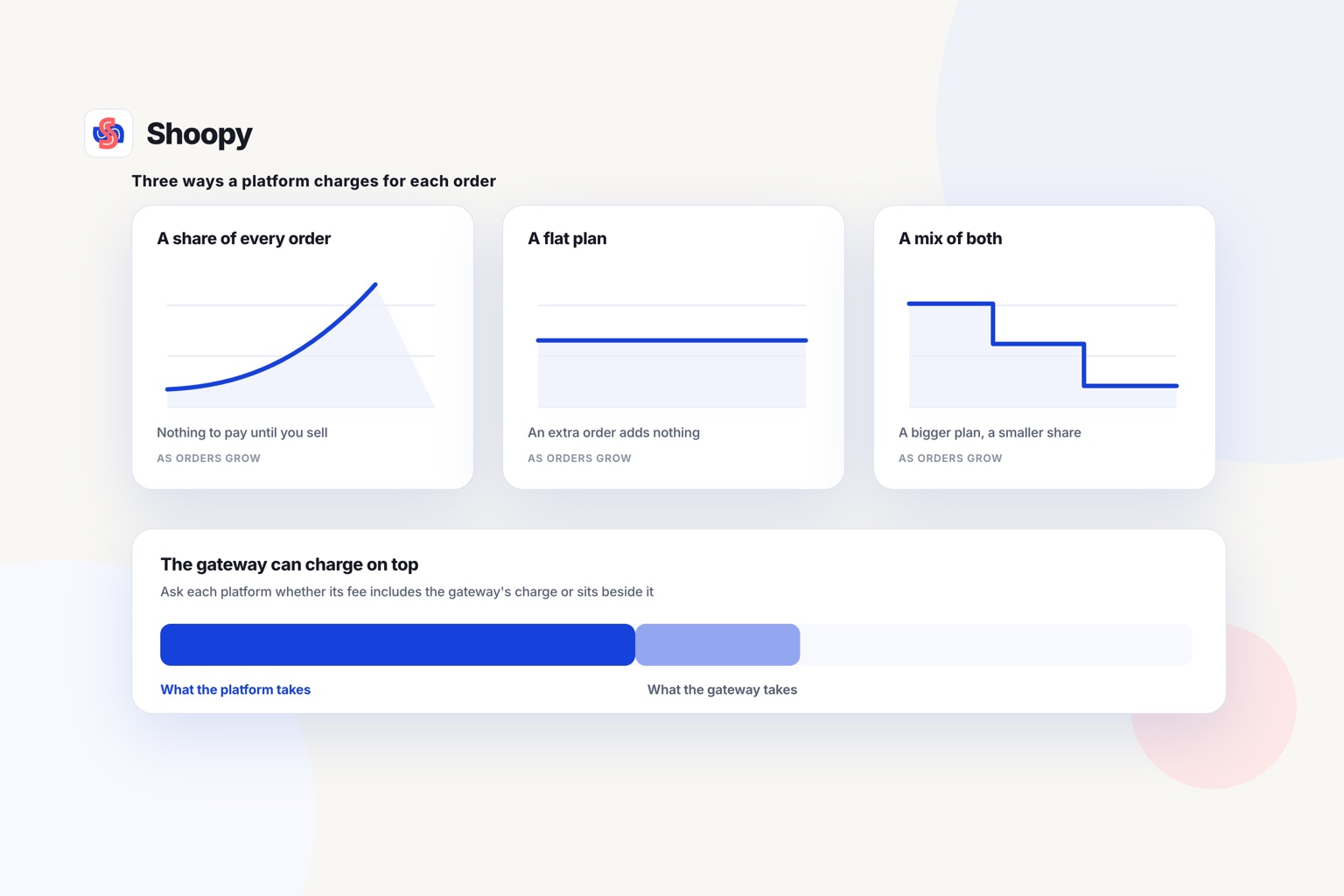
A platform can charge a plan fee, a percentage of each order, or both. Self-hosted software charges neither, but you pay to run it. Each rival’s fee line is in its row of the table above.
What a percentage fee costs as orders grow
With a percentage fee, a month with ten orders costs you very little. The amount then rises with every order you take. With a fee of 2%, 1,000 prepaid orders cost you the value of 20 orders.
With a fee of 1%, the same 1,000 orders cost the value of 10 orders. So check the percentage at the plan you will need when sales grow, not only at launch.
What running the software yourself costs
Self-hosted software can carry no platform fee at all. Instead, you pay for hosting, paid extensions and a developer’s time. You pay these bills even in a month with few sales.
Where the payment gateway fits
A payment gateway is the company that moves the buyer’s money into your bank account. Razorpay and PayU are two gateways that work in India. Check whether the gateway’s fee is charged on top of the platform’s fee or included in it.
How to compare on real numbers
Take last month’s prepaid orders and their average value. Multiply by each platform’s percentage, then add the plan fee and the gateway fee. The lowest total at your real order count is the one that costs you least today.
Which payment modes does a D2C store in India need?
A D2C store in India needs UPI, cards, netbanking and cash on delivery working at checkout before the first order arrives. UPI stands for Unified Payments Interface. A Reserve Bank of India release from March 2022 explains that UPI is available on smartphones and, through UPI123Pay, on feature phones.
Cash on delivery (COD) lets a buyer pay at the door. Its risk is the refused parcel, which the courier carries back to you. This is called RTO, return to origin. Check whether your courier charges you for the return trip as well.
Advance payment on COD lowers that risk. The buyer pays a small part online when ordering and the rest at the door. A buyer who has already paid part of the order has a reason to accept it.
Before you pick a platform, place one test order with each payment mode. Check that each order reaches your order list. Then check that a refund goes back to the method the buyer used.
What should an ecommerce platform for D2C brands include?
An ecommerce platform for D2C brands should include five things beyond fees: ownership, one catalogue, a branded app, a delivery charge for each zone and cart reminders.
Ownership of the domain and the buyers
Register the domain in your brand’s name, not your agency’s. Make sure you can download your customer list and order history whenever you want. If leaving a platform is hard, you do not fully control your store.
One catalogue behind every channel
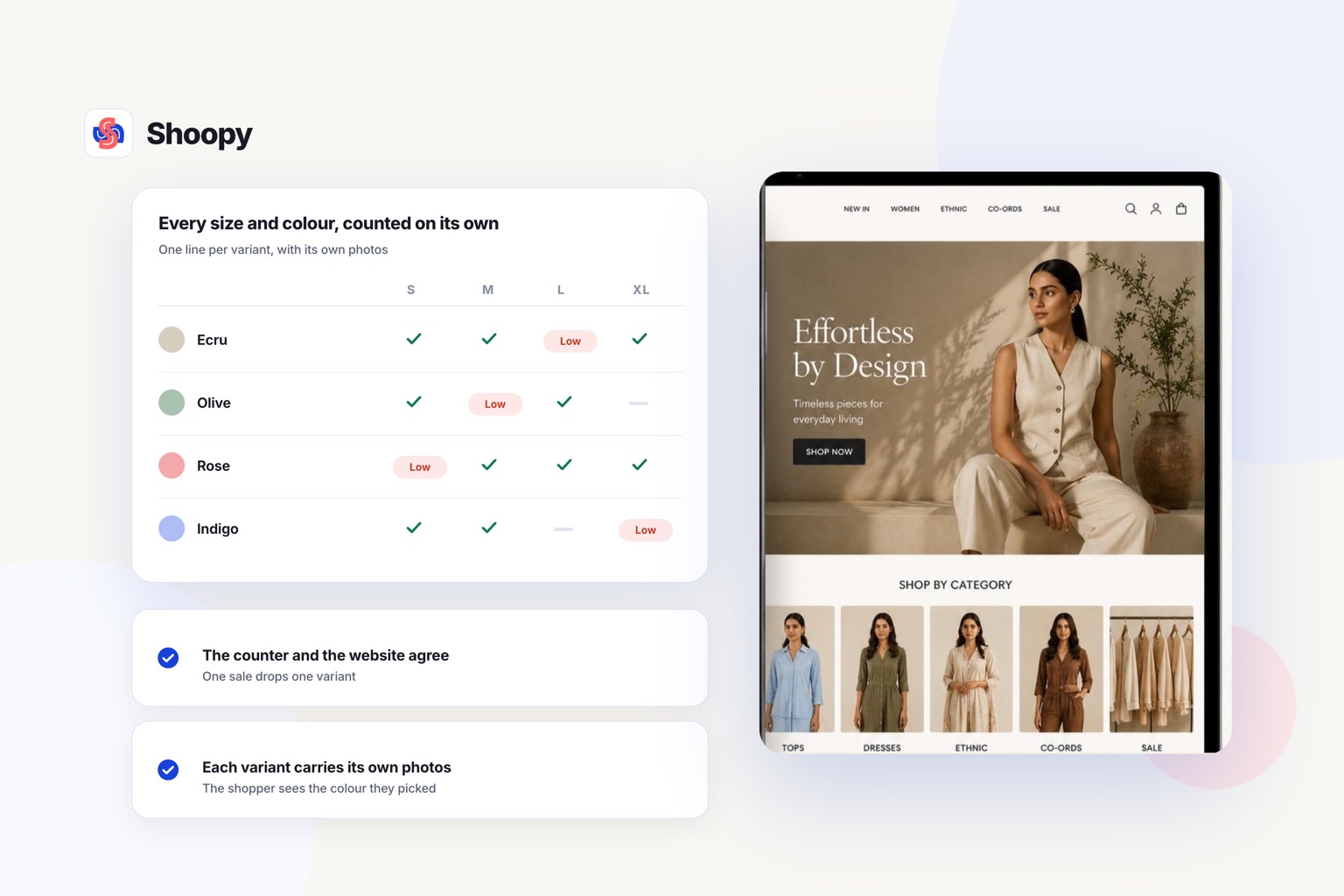
Your website and your app should read the same products, prices and stock. Edit a price once and both channels change. Two catalogues mean two stock counts, and then you sell stock you no longer have.
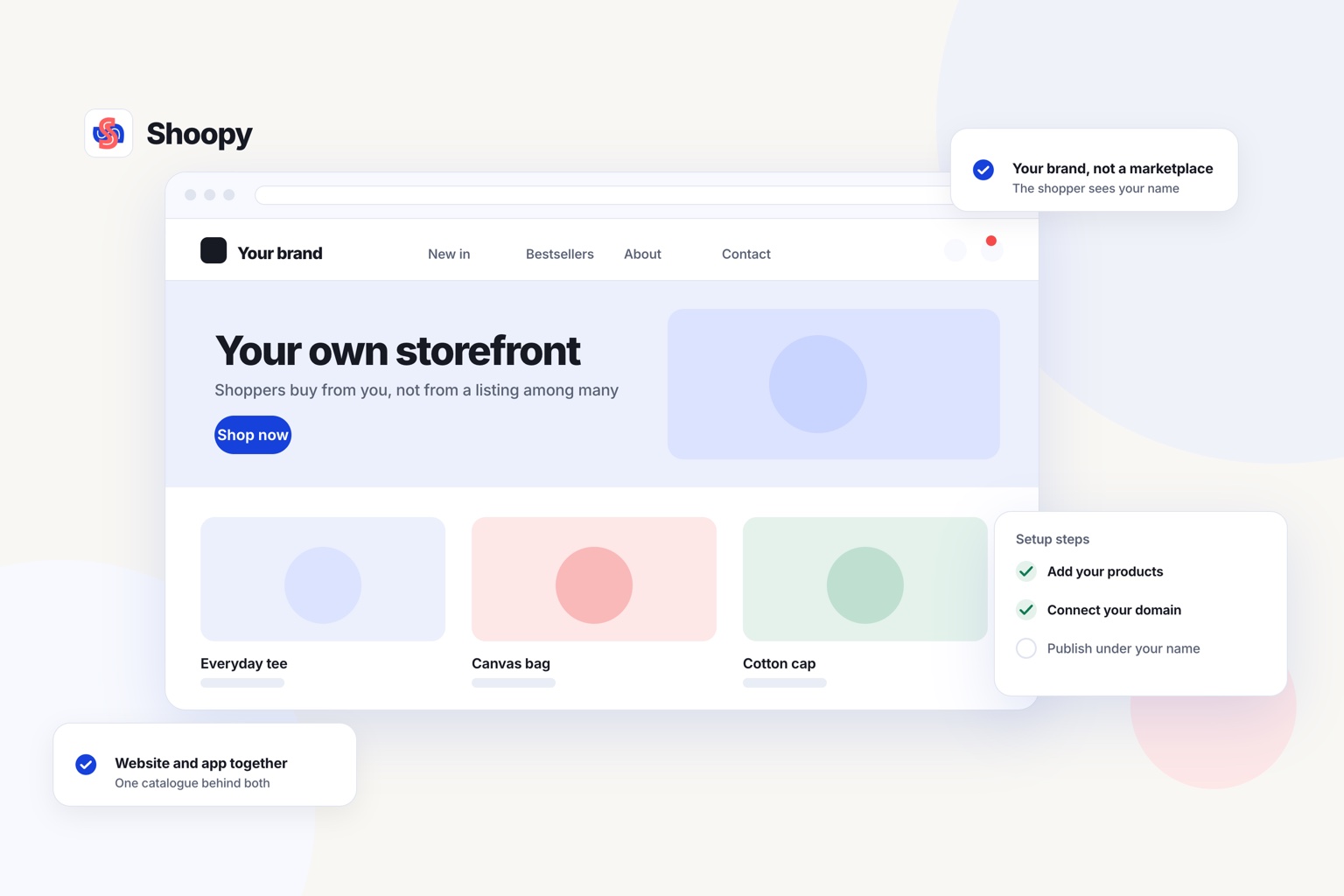
This page shows a D2C website and apps on one catalogue, with one order list behind them.
A branded app under your name
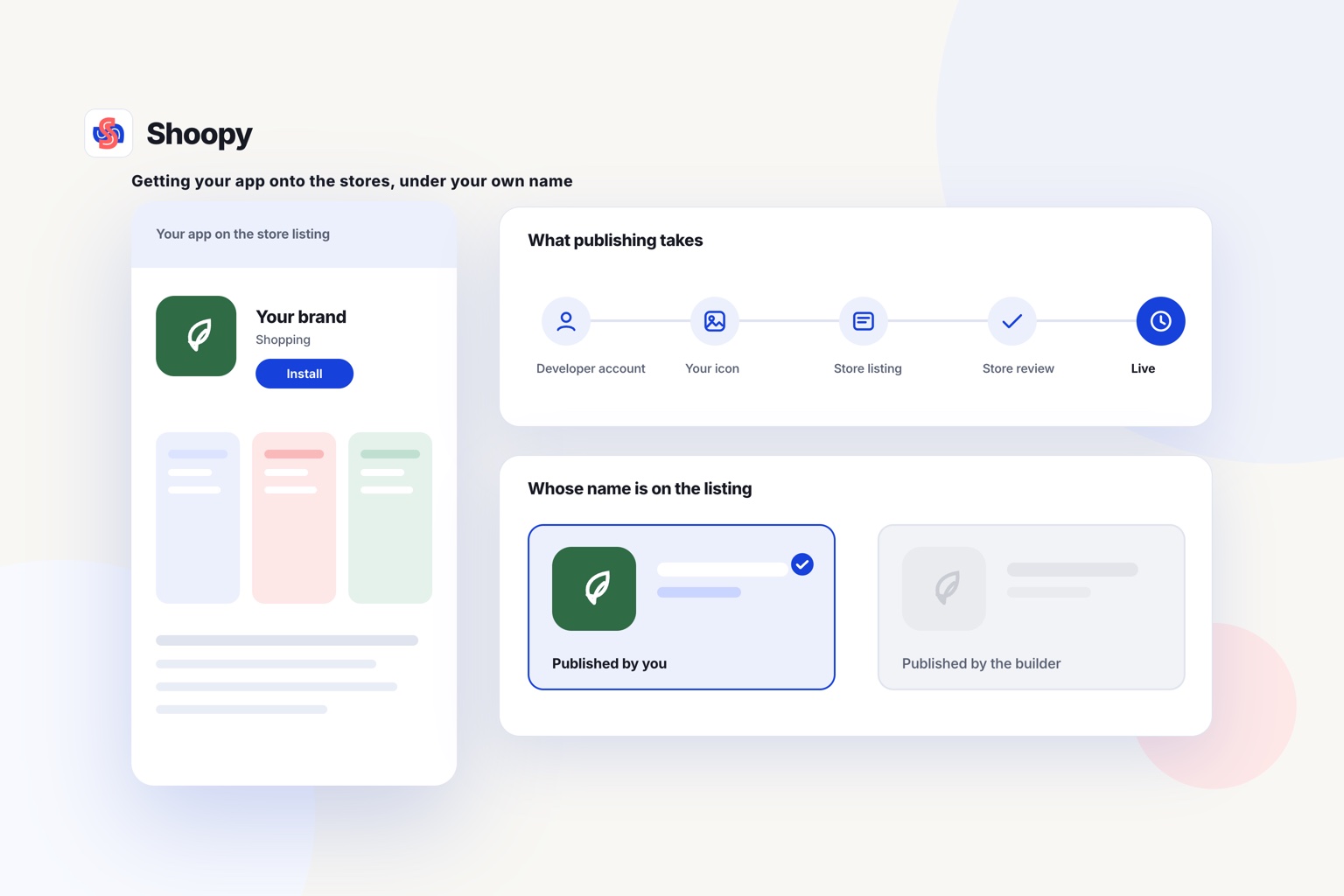
A branded app is a shopping app on Google Play or the App Store that carries your brand’s name and icon. It gives repeat buyers a direct route to you. This guide on launching a shopping app covers what to decide before you build one.
A delivery charge for each zone
Shipping a parcel costs more to some areas than to others. Check that you can set a different delivery charge for each zone you serve. Then the charge on a distant order covers its shipping.
Cart reminders on WhatsApp
Some buyers add a product to the cart and leave without paying. A WhatsApp reminder about that cart gives them a second prompt to finish the order. Check whether the platform sends these reminders itself or needs a separate tool.
What goes wrong when a D2C brand picks a platform, and how do you stop it?
Four things go wrong: comparing only plan prices, a separate app catalogue, unguarded COD orders and accounts held by an agency. Each one has a fix you can apply before launch.
Comparing only plan prices hides the order fee. A low plan price with a high percentage can cost more once orders grow. Work out the total on real orders before you sign up.
Building the app later on a separate system creates a second catalogue and a second stock count. Buyers then see items that have already sold out. Choose a platform where the app reads the website’s catalogue.
COD with no checks brings more refused parcels. A launch offer can bring many COD orders at once. Turn on advance payment on COD. Confirm large orders with the buyer before you ship.
If an agency registers your accounts, you depend on it for every change. Keep the domain, the payment gateway and the app listing in the brand’s name. Ask for every login at the start, not when you want to leave.
Which platform fits which kind of D2C brand?
Pick by three facts: where your buyers live, who will run the software, and whether you need a branded app. This list is sorted by the kind of brand, not by rank.
- Your buyers live in many countries. Start with Shopify, and read its row in the table above.
- You have your own developers. Consider WooCommerce, and check its row in the table above for what you pay for separately.
- You expect many repeat buyers. Compare Dukaan’s plans using its row in the table above.
- You want a website and a branded app on one catalogue. Shoopy runs both from one catalogue, with UPI, cash on delivery and WhatsApp cart reminders available.
- You also sell from shops of your own. Look for stock counted at each shop, with each online order sent to the shop that serves the buyer. Shoopy does both from the same catalogue.
One boundary is worth stating plainly. Shoopy’s Shopify comparison advises choosing Shopify if you sell to many countries in many currencies. If most of your buyers live abroad, start there.
Do your website and your branded app need one catalogue and one order list? See how an online store on your own domain works, and book a demo from that page.
Frequently asked questions
Can a D2C brand sell from its Instagram page alone?
It can take orders there, but Instagram is not a store on its own. An order placed in a chat leaves no record in your stock count or order list, and the buyer’s details stay in the chat. Put your website link in the profile and in each post, so every order lands in your own store with the buyer’s details.
Should a D2C store let buyers check out without an account?
Yes, at least for the first order. Baymard’s 2025 checkout benchmark of leading US and European sites found 62% do not make guest checkout the most prominent option, and many buyers leave rather than create an account. Ask only for what delivery needs, such as a phone number and address, and offer an account after the order.
How do I reduce cash on delivery returns?
Take part of the payment online at checkout, so the buyer has paid something before dispatch. Confirm high-value COD orders by phone or WhatsApp before you pack them. Stop COD for PIN codes (postal codes) that send back many parcels. Each step reduces RTO, where the courier brings a refused parcel back.
Can a brand sell on a marketplace and its own website together?
Yes. A marketplace can bring new buyers while your own website takes repeat orders. The risk is stock. If both channels draw on the same units, track every SKU (stock keeping unit) in one place. Otherwise you will sell the same item twice and have to cancel an order.
How many payment gateways does a D2C brand need?
One gateway is enough at launch, as long as it takes UPI, cards and netbanking. A second gateway helps once orders are steady, because you can move payments to it if the first one has an outage. Check that your platform lets you switch between gateways without rebuilding the checkout.