 Shoopy
 Managing online and offline retail together
One catalogue, one stock count, one order queue — the three unifications that make a counter and an online store run as one shop instead of two.
Shops rarely go online all at once. The website arrives next to the counter, then WhatsApp orders arrive next to the website — and suddenly the same shop is three shops, each with its own idea of what is in stock. The fix is not more software. It is fewer copies of the truth.
One catalogue
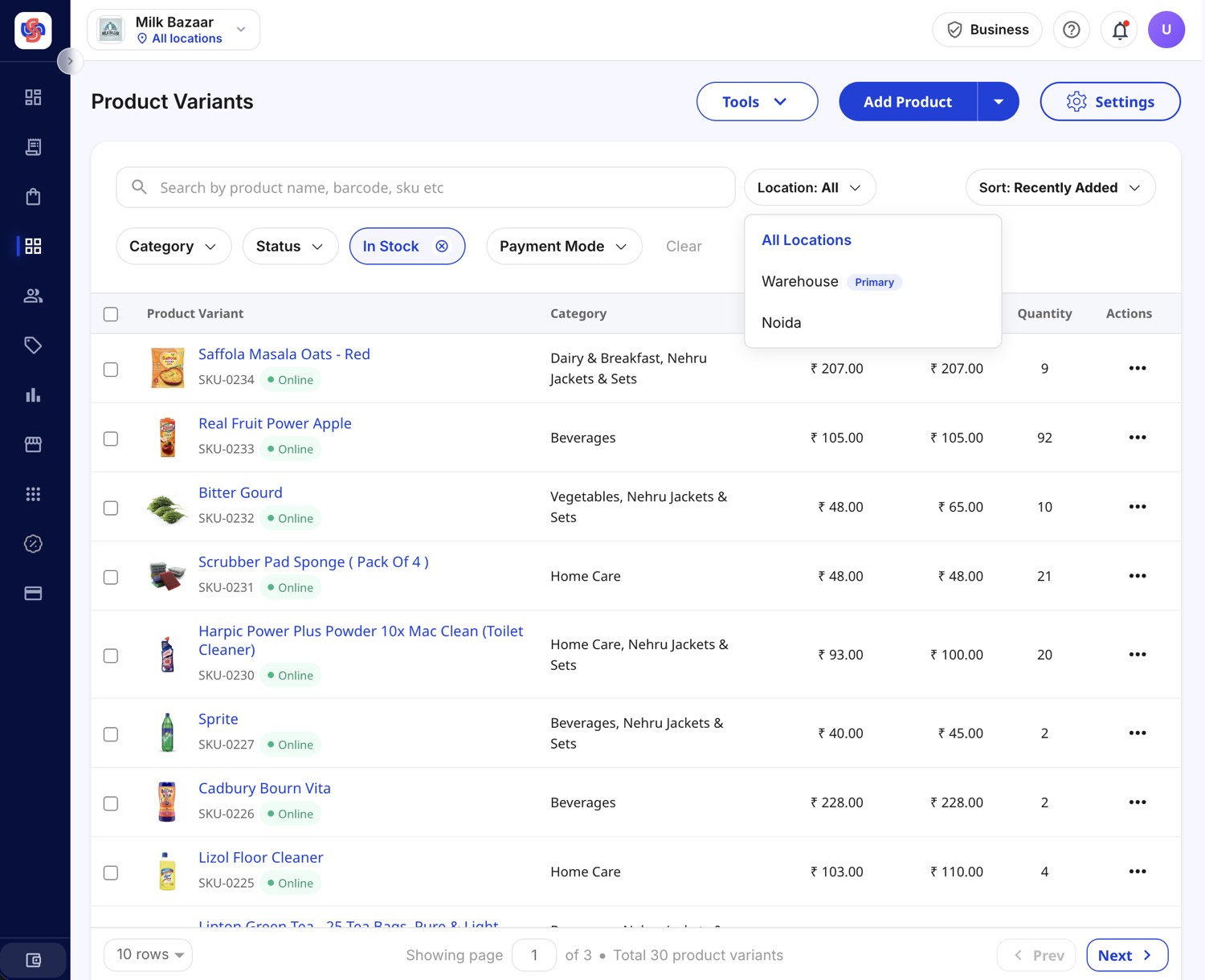
Every problem downstream starts with two catalogues. The billing machine has HSN codes the website lacks; the website has photos and descriptions the counter never sees; a price change reaches one and not the other. Maintain the product once — name, price, tax detail, images, variants — and let every channel read the same record. The moment a correction has to be made twice, it will eventually be made once.
One stock count
The classic failure: the shelf sells the last unit at 6pm, the website sells it again at 8pm, and the apology is yours. Stock has to move with the sale regardless of where the sale happened — a bill printed at the counter should decrement the same count the online store checks. With more than one location, the count needs to know where the stock is, so the website sells what the fulfilling store actually holds.
One order queue
Website, app, WhatsApp, counter, the occasional phone order typed in by staff — if each lives in its own screen, something gets missed at the busy hour. One queue with one status pipeline means the person packing orders looks in exactly one place, and the customer’s “where is my order?” has one answer.
What to check in whatever you use
- Bill an item at the counter; confirm the online stock moved within a minute.
- Change one price; count how many places you had to change it.
- Take one order on WhatsApp; see whether it reaches the same queue as the website’s orders.
- Print the two invoices — counter and online — and compare tax fields. They should differ only in the channel.
Four checks, ten minutes. If any fail, you are running parallel shops and paying for it in staff time and stock errors.
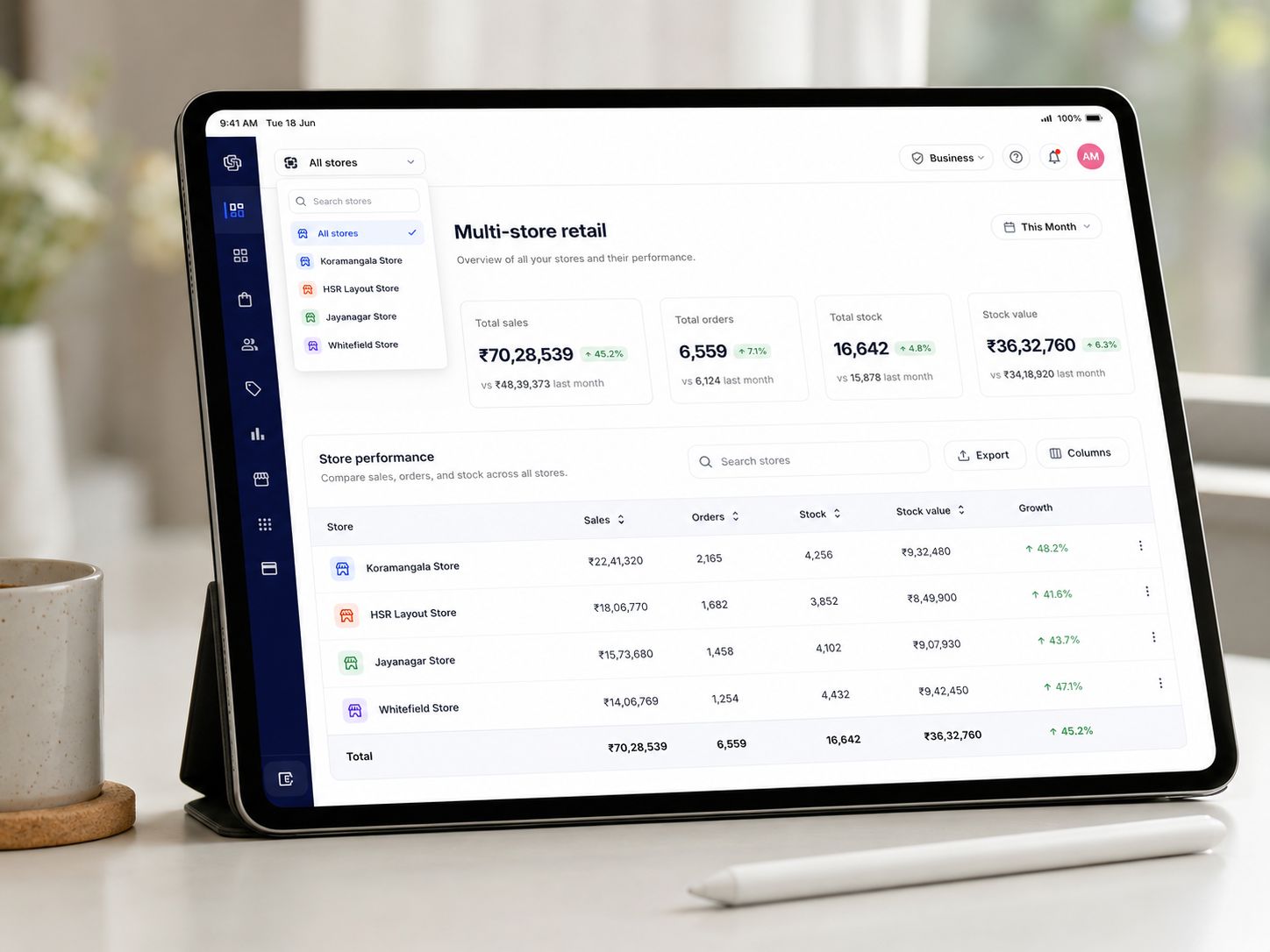
This is the shape Shoopy takes: counter billing and the online store on one catalogue, orders and stock in one queue with per-location counts, and multi-store retail when one shop becomes several. Online and offline are not two strategies — they are one shop, counted once.